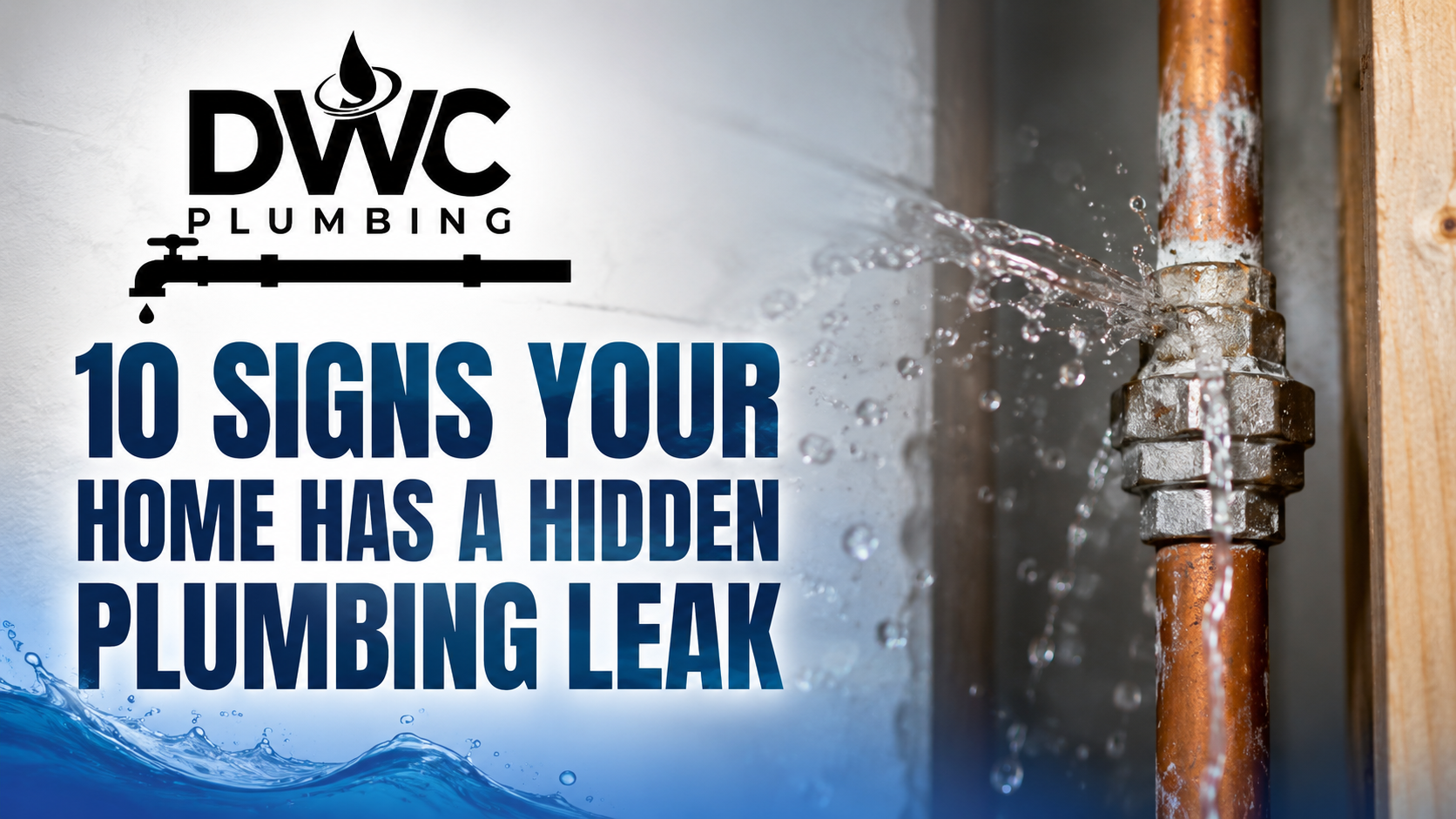
Most plumbing leaks are easy to spot. A dripping faucet or a puddle under the sink usually makes it obvious that something needs attention. Hidden plumbing leaks, however, are a different story. These leaks often occur behind walls, under floors, or beneath your home’s foundation, allowing water to cause damage for weeks or even months before anyone notices.
Even a small leak can lead to expensive repairs, mold growth, damaged drywall, warped flooring, and higher utility bills if left untreated. Knowing what warning signs to look for can help you catch a hidden leak early and avoid significant damage to your home.
Here are ten common signs that your home may have a hidden plumbing leak.
Why Hidden Plumbing Leaks Should Never Be Ignored
Hidden leaks rarely fix themselves. Instead, they gradually worsen over time, allowing moisture to spread throughout your home. Besides structural damage, excess moisture creates the perfect environment for mold and mildew, which can impact indoor air quality and even your family’s health.
The sooner a leak is located and repaired, the less damage it can cause and the more money you’ll likely save.
1. Your Water Bill Suddenly Increases
One of the first indicators of a hidden plumbing leak is an unexplained increase in your monthly water bill.
If your family’s water usage habits haven’t changed but your bill continues to climb, water may be escaping somewhere inside your plumbing system.
Small leaks may waste only a few gallons each day, but over the course of a month, that wasted water adds up quickly.
What to Watch For
- Consistently higher water bills
- No increase in household water use
- Bills that continue rising month after month
If your utility costs seem unusually high, it’s worth having your plumbing inspected.
2. Water Stains on Walls or Ceilings
Discolored spots on walls or ceilings are often one of the clearest warning signs of a hidden leak.
Water leaking behind drywall can create yellow, brown, or copper-colored stains. Over time, the paint may bubble, peel, or begin to crack.
Never assume these stains are simply cosmetic. They often indicate ongoing water damage that requires immediate attention.
Common Areas
- Around bathrooms
- Beneath upstairs plumbing fixtures
- Near water supply lines
- Around laundry rooms
3. Mold or Mildew Keeps Returning
Bathrooms naturally experience moisture, but mold appearing in unusual places can point to hidden plumbing problems.
If mold repeatedly returns after cleaning or appears on walls that don’t normally get wet, there may be moisture accumulating behind the surface.
Besides creating unpleasant odors, mold can spread quickly and become much more difficult to remove if the source of the moisture isn’t repaired.
4. Musty Odors Throughout the House
Hidden plumbing leaks often create damp environments where bacteria and mildew thrive.
If certain rooms smell musty even after cleaning, opening windows, or using air fresheners, trapped moisture may be the cause.
Pay particular attention if the smell is strongest near:
- Bathrooms
- Kitchens
- Laundry rooms
- Basements
- Utility closets
Persistent odors usually indicate an underlying moisture issue rather than poor ventilation.
5. Low Water Pressure
A sudden drop in water pressure isn’t always caused by clogged fixtures.
A hidden leak in your plumbing system can reduce water pressure throughout your home because water is escaping before it reaches your faucets or showerheads.
Signs Include
- Weak shower pressure
- Faucets taking longer to fill containers
- Pressure changing unexpectedly
While several plumbing issues can cause low pressure, hidden leaks are one possibility that should always be considered.
6. Warm or Wet Spots on Your Floors
If you notice certain areas of your flooring feel damp, unusually warm, or soft underfoot, you could have a leak beneath the floor.
This is especially common with slab leaks, where water lines run underneath a concrete foundation.
Ignoring these warning signs can eventually lead to flooring damage, foundation problems, or costly structural repairs.
Check For
- Damp carpet
- Warped hardwood flooring
- Loose tile
- Warm areas on tile floors
- Flooring that feels spongy
7. You Hear Running Water When Everything Is Off
One of the easiest ways to detect a hidden leak is simply by listening.
If no faucets, appliances, or toilets are running but you still hear water flowing through pipes, water could be escaping somewhere inside your home.
Late at night, when everything is quiet, these sounds often become much easier to notice.
Common Sounds
- Running water behind walls
- Dripping inside ceilings
- Hissing from pipes
- Constant water movement
These sounds shouldn’t be ignored, especially if they continue consistently.
8. Cracks in Walls or Foundation
Over time, hidden plumbing leaks can weaken soil beneath your home’s foundation.
As the soil shifts, your foundation may settle unevenly, leading to visible cracks in walls, ceilings, or flooring.
While not every crack is caused by plumbing, foundation movement combined with other leak symptoms deserves immediate attention.
Watch for:
- New drywall cracks
- Cracks near doors and windows
- Foundation cracks
- Uneven floors
9. Your Water Meter Keeps Moving
A simple water meter test can help determine if your home has a hidden leak.
Turn off every faucet, appliance, sprinkler system, and any fixture that uses water.
Next, check your water meter.
Wait about 30 to 60 minutes without using any water.
If the meter reading changes during that time, water is likely flowing somewhere inside your plumbing system.
This quick test can provide an early indication that professional leak detection may be needed.
10. Wet Areas Outside Your Home
Hidden plumbing leaks don’t always stay indoors.
Underground water lines can leak beneath your yard, creating unusually wet patches even during dry weather.
You may notice:
- Grass growing much faster in one area
- Soggy soil
- Standing water
- Sinkholes developing
- Muddy patches with no recent rain
Outdoor leaks waste significant amounts of water and should be repaired as soon as possible.
What Happens If a Hidden Leak Is Left Untreated?
Many homeowners delay calling a plumber because the leak doesn’t seem urgent.
Unfortunately, hidden leaks rarely remain small for long.
Ignoring them can lead to:
Structural Damage
Water weakens wood framing, drywall, insulation, flooring, and even concrete over time.
Mold Growth
Excess moisture allows mold colonies to spread behind walls where they often go unnoticed until significant damage has occurred.
Higher Utility Bills
Even a slow drip can waste thousands of gallons of water every year.
Damage to Personal Property
Furniture, electronics, flooring, and valuables may all be damaged by ongoing moisture.
Expensive Repairs
What begins as a simple leak repair can eventually require drywall replacement, flooring installation, mold remediation, or foundation repairs if left unchecked.
How Professional Leak Detection Works
Today’s plumbers use advanced equipment that helps locate hidden leaks without tearing apart your home unnecessarily.
Depending on the situation, professionals may use:
Acoustic Leak Detection
Sensitive listening devices detect the sound of escaping water inside walls or underground.
Thermal Imaging Cameras
Infrared cameras identify temperature differences caused by hidden moisture.
Moisture Meters
These tools measure moisture levels inside walls, ceilings, and flooring.
Video Camera Inspections
Small waterproof cameras inspect drain and sewer lines to identify cracks or damage.
These technologies allow plumbers to pinpoint leaks accurately while minimizing disruption to your property.
Preventing Hidden Plumbing Leaks
Although not every leak can be prevented, regular maintenance greatly reduces your risk.
Consider these preventative tips:
- Inspect visible plumbing regularly.
- Replace aging supply lines before they fail.
- Address small leaks immediately.
- Monitor your monthly water bill.
- Know where your home’s main water shutoff valve is located.
- Schedule routine plumbing inspections, especially for older homes.
- Watch for early warning signs instead of waiting for major damage.
Being proactive often saves homeowners thousands of dollars over the life of their plumbing system.
Protect Your Home with Early Leak Detection
Hidden plumbing leaks can quietly damage your home long before visible signs appear. Paying attention to changes like higher water bills, musty odors, damp flooring, water stains, or reduced water pressure can help you catch problems before they become expensive repairs.
If you’ve noticed any of these warning signs, don’t wait for the damage to get worse. A professional plumbing inspection can quickly identify hidden leaks, recommend the right repairs, and help protect your home from unnecessary water damage. Early detection is one of the smartest investments you can make in maintaining a safe, efficient, and worry-free plumbing system.