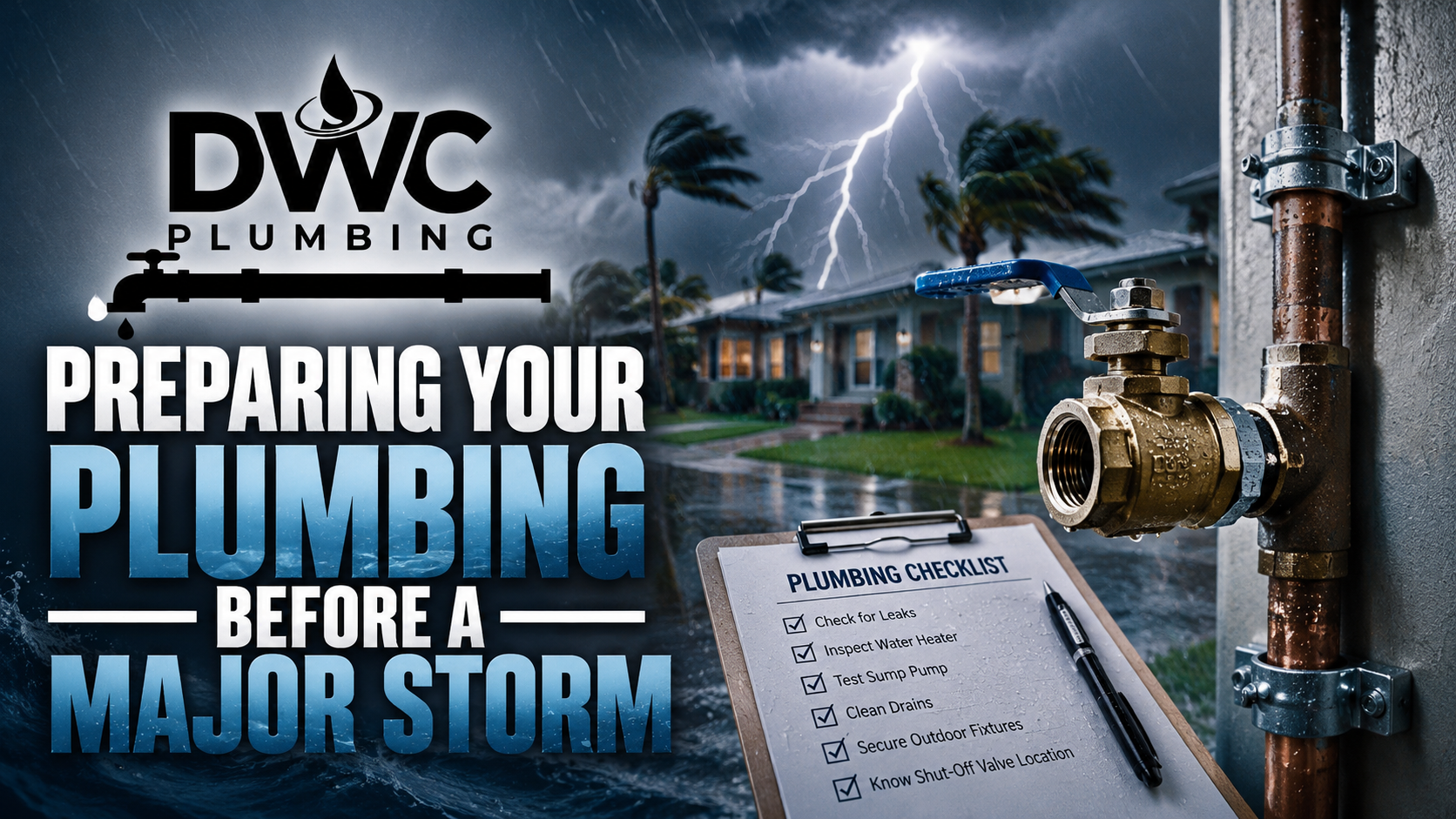
When people think about preparing their homes for a major storm, they often focus on securing outdoor furniture, boarding up windows, or stocking emergency supplies. While those are all important steps, one area that’s frequently overlooked is the plumbing system.
Heavy rain, flooding, freezing temperatures, and strong winds can all put significant stress on your home’s plumbing. Taking a few preventative measures before severe weather arrives can help minimize damage, reduce the risk of costly repairs, and keep your home functioning when you need it most.
Whether you’re preparing for a hurricane, tropical storm, severe thunderstorm, or winter storm, here’s how to get your plumbing ready before bad weather strikes.
Why Storm Preparation Matters for Your Plumbing
Your plumbing system works behind the scenes every day, but during a major storm it can face several challenges at once.
Heavy rainfall may overwhelm sewer systems, fallen trees can damage underground water lines, freezing temperatures can burst exposed pipes, and power outages may affect homes with well pumps or sump pumps.
Preparing in advance gives you time to address small issues before they become major emergencies.
Know Where Your Main Water Shut-Off Valve Is
One of the most important things every homeowner should know is the location of the main water shut-off valve.
If a pipe bursts during a storm, shutting off the water immediately can prevent thousands of dollars in water damage.
Before the Storm
- Locate the shut-off valve.
- Make sure everyone in your household knows where it is.
- Test that it turns properly.
- Clear away any storage blocking easy access.
In an emergency, every second counts.
Inspect for Existing Plumbing Leaks
A small plumbing leak may not seem urgent during normal conditions, but storms can quickly make existing problems worse.
Inspect your home for:
- Dripping faucets
- Leaking supply lines
- Damp cabinets
- Water stains
- Running toilets
- Moisture around appliances
Repairing these issues before severe weather arrives reduces the chances of larger failures during the storm.
Clean Your Gutters and Downspouts
Although gutters aren’t technically part of your plumbing system, they play an important role in managing water around your home.
Clogged gutters can overflow, allowing water to pool near your foundation. Excess groundwater increases the risk of leaks into basements, crawl spaces, and even slab foundations.
Make Sure
- Gutters are free of leaves and debris.
- Downspouts direct water away from the home.
- Splash blocks are properly positioned.
- Drainage around your property flows away from the foundation.
Proper drainage helps protect both your home’s structure and plumbing.
Check Your Sump Pump
If your home has a basement or crawl space, your sump pump becomes one of your most valuable tools during heavy rain.
Before storm season:
Test the Pump
Pour a bucket of water into the sump pit.
The float should activate, and the pump should quickly remove the water.
If it doesn’t, schedule repairs before severe weather arrives.
Consider Battery Backup
Power outages often occur during major storms.
A battery backup system allows your sump pump to continue operating even if electricity is unavailable, helping reduce the risk of flooding.
Protect Outdoor Plumbing Fixtures
Outdoor plumbing is especially vulnerable during storms.
High winds, flying debris, and freezing temperatures can all damage exposed fixtures.
Inspect:
- Hose bibs
- Outdoor faucets
- Irrigation systems
- Garden hoses
- Outdoor kitchens
Disconnect hoses before storms to reduce pressure on outdoor faucets and prevent damage.
Secure Your Water Heater
Your water heater is one of the largest plumbing appliances inside your home.
In areas prone to hurricanes or earthquakes, securing the tank with approved straps can help prevent movement during severe weather.
Also inspect for:
- Rust
- Corrosion
- Water around the base
- Loose connections
If your water heater is nearing the end of its expected lifespan, replacing it before storm season may help prevent unexpected failures.
Prepare Homes with Well Water
Homes served by private wells have additional considerations.
Most well pumps require electricity.
If power goes out, water service often stops as well.
Helpful Preparations
- Fill clean containers with drinking water.
- Store extra water for cooking and hygiene.
- Consider a generator capable of powering your well pump.
- Test your backup power source before storm season.
Having emergency water available provides peace of mind during extended outages.
Prevent Sewer Backups
Heavy rainfall can overwhelm municipal sewer systems.
When this happens, wastewater may back up into homes through floor drains, sinks, toilets, or showers.
Although not every home experiences this problem, it’s worth taking precautions.
Helpful Prevention
- Avoid pouring grease into drains.
- Have slow drains cleaned before storm season.
- Consider installing a backwater valve if recommended for your area.
- Avoid flushing anything besides toilet paper.
Keeping drains flowing freely reduces the chance of backups.
Know What to Do If Pipes Freeze
Not every storm brings flooding.
Winter storms can create frozen pipes that burst as temperatures rise.
Before freezing weather:
- Insulate exposed pipes.
- Disconnect outdoor hoses.
- Shut off irrigation systems.
- Allow indoor faucets to drip slightly during extremely cold temperatures.
- Open cabinet doors beneath sinks located on exterior walls.
A little preparation goes a long way toward preventing frozen plumbing.
Assemble a Plumbing Emergency Kit
Alongside your regular emergency supplies, it’s helpful to keep a few plumbing-related items readily available.
Consider including:
- Adjustable wrench
- Pipe wrench
- Flashlights
- Extra batteries
- Plumber’s tape
- Bucket
- Towels
- Work gloves
- Plastic sheeting
- Shop vacuum if available
Having these supplies nearby allows you to respond more quickly if something goes wrong.
Watch for Warning Signs After the Storm
Even if your plumbing appears fine during the storm, it’s important to inspect everything afterward.
Look for:
Water Pressure Changes
Low pressure may indicate a damaged water line.
Wet Areas Around the Property
Standing water or unusually soggy patches could point to underground leaks.
Ceiling or Wall Stains
Water damage may not appear immediately after a leak begins.
Strange Sounds
Hissing or running water behind walls should always be investigated.
Slow Drains
Storm debris or sewer issues may affect drainage after heavy rainfall.
If anything seems unusual, contact a licensed plumber before minor issues become expensive repairs.
What If Your Home Floods?
Floodwater can contaminate plumbing fixtures, water heaters, and even your drinking water supply.
If flooding occurs:
- Shut off electricity if it’s safe to do so.
- Turn off the home’s water supply if plumbing has been damaged.
- Avoid using plumbing fixtures until they’re inspected.
- Have your water tested if you’re on a private well.
- Schedule a professional plumbing inspection before resuming normal use.
Floodwater often contains bacteria, chemicals, and debris that require professional cleaning and sanitizing.
Why Professional Inspections Matter Before Storm Season
Many plumbing issues remain hidden until severe weather exposes them.
Professional inspections can identify:
Hidden Leaks
Small leaks can become major pipe failures under changing weather conditions.
Aging Pipes
Older plumbing materials may be nearing the end of their lifespan.
Corrosion
Corroded pipes are more likely to fail under stress.
Water Heater Problems
Small maintenance issues can often be corrected before they become emergencies.
Routine inspections provide valuable peace of mind before storm season begins.
Storm Preparation Is an Investment in Your Home
Preparing your plumbing before a major storm doesn’t have to be complicated. A few hours spent inspecting your system, repairing small issues, protecting outdoor fixtures, and testing essential equipment can prevent much larger problems later.
Storms are unpredictable, but your preparation doesn’t have to be. By taking proactive steps now, you’ll reduce the risk of water damage, plumbing emergencies, and costly repairs while helping ensure your family has reliable access to clean water when it’s needed most.
If you’d like additional peace of mind before the next storm arrives, schedule a professional plumbing inspection. An experienced plumber can identify potential weaknesses, recommend preventative maintenance, and help make sure your plumbing system is ready for whatever the weather brings.