Water is essential to every home, but when it escapes from your plumbing system where it shouldn’t, it can quietly cause thousands of dollars in damage. Hidden plumbing leaks often develop behind walls, under floors, inside ceilings, or beneath your home’s foundation. Because these leaks aren’t immediately visible, many homeowners don’t realize there’s a problem until extensive damage has already occurred.
The good news is that hidden leaks usually leave clues long before they become major disasters. Knowing what to watch for can help you catch problems early, protect your home, and avoid expensive repairs.
Here are ten common signs your home may have a hidden plumbing leak.
1. Your Water Bill Suddenly Increases
One of the earliest and easiest signs of a hidden plumbing leak is an unexpected increase in your monthly water bill.
If your family’s water usage hasn’t changed but your bill continues climbing, water may be escaping somewhere inside your plumbing system. Even a small leak that drips continuously throughout the day can waste thousands of gallons of water each year.
Compare your recent bills with previous months. If you notice a significant increase without a clear explanation, it’s time to have your plumbing inspected.
2. You Notice Water Stains on Walls or Ceilings
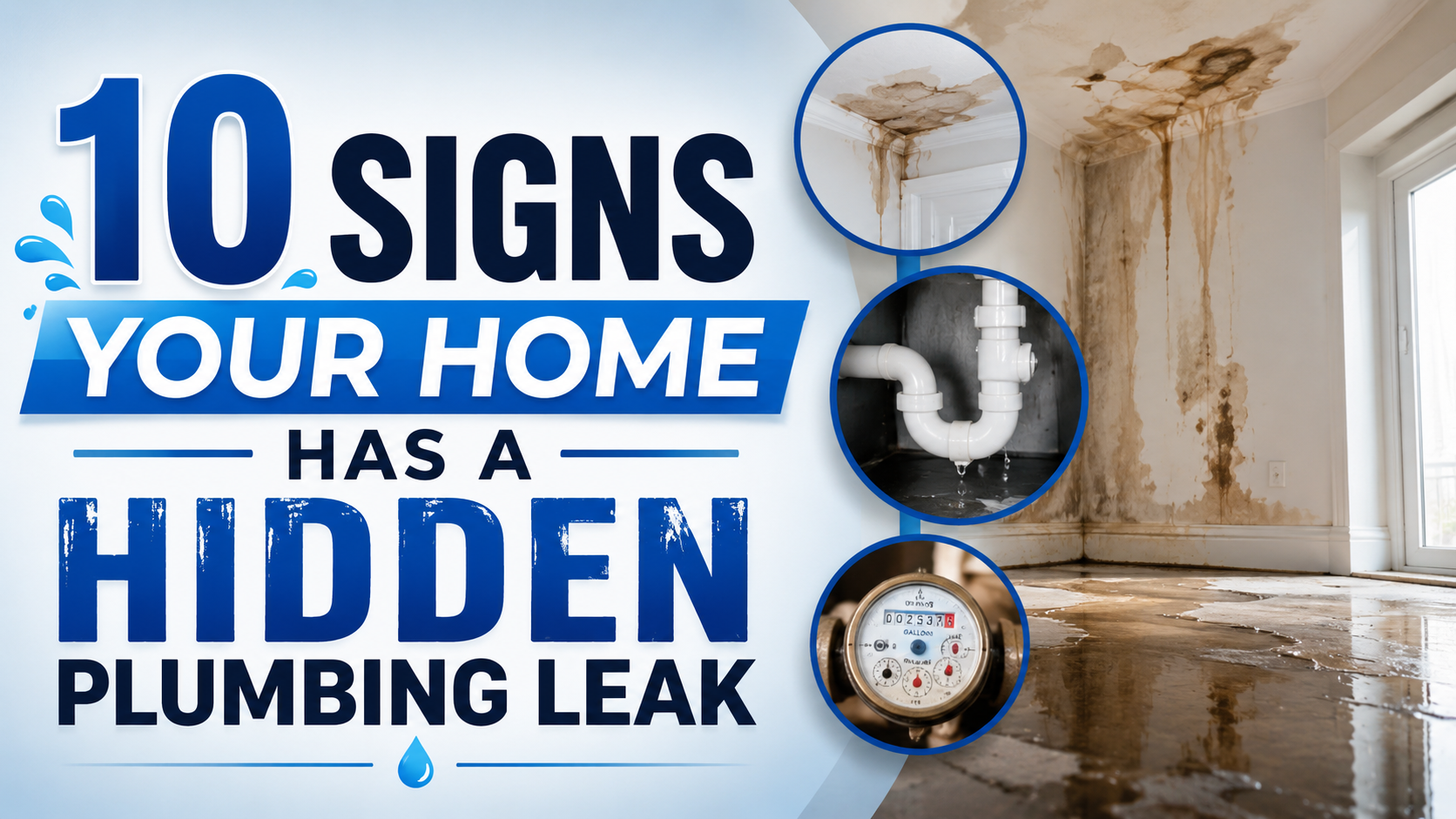
Discolored spots on drywall or ceilings often indicate that water is traveling where it shouldn’t.
These stains may appear as:
- Yellow or brown discoloration
- Dark rings
- Peeling paint
- Bubbling drywall
- Sagging ceilings
Even if the stain seems dry, the leak may still be active behind the surface. Water can travel surprising distances before finally becoming visible, making professional leak detection important for locating the true source.
Ignoring these warning signs can eventually lead to structural damage and costly repairs.
3. Mold or Mildew Appears Without an Obvious Cause
Mold thrives in damp, humid environments.
If you notice mold growing on walls, ceilings, cabinets, or around baseboards despite keeping your home clean, excess moisture from a hidden plumbing leak could be the culprit.
You may also notice:
- A persistent musty smell
- Black or green spots on surfaces
- Increased allergy symptoms
- Moisture around cabinetry
Since mold can begin growing within 24 to 48 hours of water exposure, even a slow leak can create ideal conditions for mold colonies.
Addressing both the leak and any resulting mold quickly helps protect your home and your family’s health.
4. Your Floors Feel Soft or Warped
Water leaking beneath flooring materials can slowly weaken the subfloor beneath your feet.
Common warning signs include:
- Soft spots
- Spongy flooring
- Buckling hardwood
- Warped laminate
- Loose tiles
- Cracked grout
Bathrooms, kitchens, laundry rooms, and areas near water heaters are especially susceptible.
If the flooring feels different than it used to, don’t assume it’s simply aging. Moisture may be compromising the structure underneath.
5. You Hear Running Water When Everything Is Off
Your plumbing system should be quiet when no fixtures are in use.
If you hear:
- Running water
- Dripping sounds
- Hissing inside walls
- Trickling noises
while every faucet, shower, appliance, and toilet is turned off, hidden water may be flowing somewhere within your plumbing system.
Sometimes these sounds are easiest to hear late at night when the house is quiet.
A professional plumber can identify whether the noise is coming from a supply line leak, a leaking toilet, or another hidden plumbing issue.
6. Low Water Pressure Throughout Your Home
Many homeowners assume low water pressure is simply part of getting older plumbing, but hidden leaks can also reduce water pressure.
When water escapes before reaching your fixtures, less pressure remains available at faucets and showers.
If you notice:
- Weak shower pressure
- Faucets taking longer to fill containers
- Reduced flow throughout multiple fixtures
there may be a leak somewhere in the supply lines.
While mineral buildup and aging pipes can also reduce pressure, professional testing can determine the actual cause.
7. Damp or Wet Areas Around Your Property
Hidden plumbing leaks aren’t always confined inside your home.
Underground water lines can leak beneath your yard, driveway, or landscaping.
Watch for:
- Constantly wet grass
- Muddy patches
- Sinkholes
- Areas of unusually green vegetation
- Standing water during dry weather
If one section of your lawn always seems wetter than the surrounding areas, an underground water line could be leaking continuously.
Early repairs help prevent soil erosion and larger underground plumbing failures.
8. Your Foundation Shows New Cracks
Slab leaks occur when plumbing beneath a concrete foundation begins leaking.
As water slowly washes away supporting soil or causes expansion beneath the slab, your home’s foundation may begin shifting.
Possible warning signs include:
- New wall cracks
- Floor cracks
- Doors that stick
- Windows that no longer close properly
- Uneven flooring
While foundation movement can have several causes, hidden plumbing leaks should always be considered as a possible factor.
Early detection can prevent significant structural damage.
9. There Is a Persistent Musty Odor
Sometimes your nose notices a plumbing leak before your eyes do.
Hidden moisture trapped behind walls or beneath flooring often creates a damp, earthy smell that doesn’t disappear with cleaning.
If you’ve cleaned thoroughly but certain rooms continue smelling musty, moisture may be accumulating where you can’t see it.
This is especially common in:
- Bathrooms
- Laundry rooms
- Kitchens
- Basements
- Utility rooms
Persistent odors usually indicate moisture has been present long enough for bacteria or mold to begin growing.
Finding and repairing the leak eliminates the source instead of simply masking the smell.
10. Your Water Meter Continues Running
One of the simplest ways to check for a hidden plumbing leak requires only a few minutes.
First, turn off:
- Faucets
- Washing machine
- Dishwasher
- Ice maker
- Sprinkler system
- Toilets (make sure none are refilling)
Next, locate your home’s water meter.
Watch the meter for several minutes. If it continues moving despite all water being turned off, water is likely flowing somewhere inside your plumbing system.
This simple test often confirms that a leak exists even before visible damage appears.
Why Hidden Plumbing Leaks Should Never Be Ignored
Even small leaks can become major problems over time.
Ignoring a hidden leak can lead to:
- Structural wood rot
- Mold growth
- Damaged drywall
- Flooring replacement
- Foundation issues
- Higher utility bills
- Pest attraction
- Reduced home value
What starts as a tiny pinhole leak can eventually require extensive restoration work if left untreated.
The sooner a leak is identified, the less damage it typically causes.
Professional Leak Detection Makes All the Difference
Finding hidden leaks isn’t always as simple as opening a wall.
Modern plumbers use specialized equipment that can locate leaks while minimizing damage to your home.
Professional leak detection may include:
- Acoustic listening equipment
- Moisture meters
- Thermal imaging technology
- Pressure testing
- Camera inspections
- Electronic leak detection
These tools help pinpoint the exact location of a leak, allowing repairs to be completed more efficiently and with less disruption.
Protect Your Home with Prompt Plumbing Repairs
Your home’s plumbing system works behind the scenes every day, making it easy to overlook small warning signs until they become major issues. Paying attention to unusual water bills, unexplained moisture, musty odors, low water pressure, or changes around your home can help you catch hidden leaks before they lead to expensive damage.
If you suspect a plumbing leak, don’t wait for the problem to get worse. The experienced team at DWC Plumbing provides professional leak detection and dependable plumbing repairs to help homeowners identify problems quickly and protect their investment. Whether the leak is behind a wall, beneath your foundation, or underground, prompt service can save you time, money, and unnecessary stress.